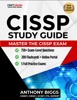
Most CISSP candidates do not fail because they lack the knowledge. They fail because they answer like an engineer when the exam rewards a manager.
If you are an experienced security professional staring down the CISSP, you already know the firewalls, the frameworks, and the protocols. What you need is a guide that teaches you to think the way the exam wants you to think, and to do it in 15 to 20 hours of focused reading instead of 1,000 pages of filler.
What you will learn:
- The critical mindset shift from technical expert to security manager that decides most pass-fail outcomes
- Every testable concept across all eight domains, aligned to the April 15, 2024 ISC2 Examination Outline
- How the Computerised Adaptive Testing (CAT) format changes your preparation strategy and pacing
- Risk, governance, and legal judgment patterns that Domain 1 (now 16% of the exam) demands
- How to read CISSP question stems, eliminate distractors, and pick the answer the exam authors actually want
Who this book is for:
- Working security professionals with five or more years of experience preparing for the CISSP
- Associates of ISC2 reinforcing their domain knowledge while completing the experience requirement
- CCSP, CISM, and CRISC holders expanding their credential portfolio
- CISSP retakers who studied with memorisation-heavy guides the first time and need a judgment-focused approach
What's inside:
- Full coverage of all eight CISSP domains aligned to the April 2024 outline refresh
- Two full-length 125-question practice examinations at Application and Analysis cognitive levels, with detailed explanations
- A Quick Reference cheat sheet with formulas, comparison tables, and last-week review prompts
- Domain-specific exam strategy callouts that flag the question patterns examiners reuse
- A post-exam roadmap covering endorsement, CPE maintenance, and cross-certification paths
Why this book is different. It is written by a practising CISSP, CCSP, and CRISC holder with 25 years of enterprise security leadership across financial services, healthcare, critical infrastructure, and technology, including roles as CISO, VP of Information Security, and Security Architect. Every paragraph is written to teach something testable in the minimum words required. No filler. No padding. No 1990s networking history.
You are not preparing to take a test. You are preparing to step into the role of a senior security professional whose judgment is trusted. This guide gets you there.